

The amazing semiotic strength of Süskind’s “Perfume”
Author: William Castaño-Bedoya · ©2015
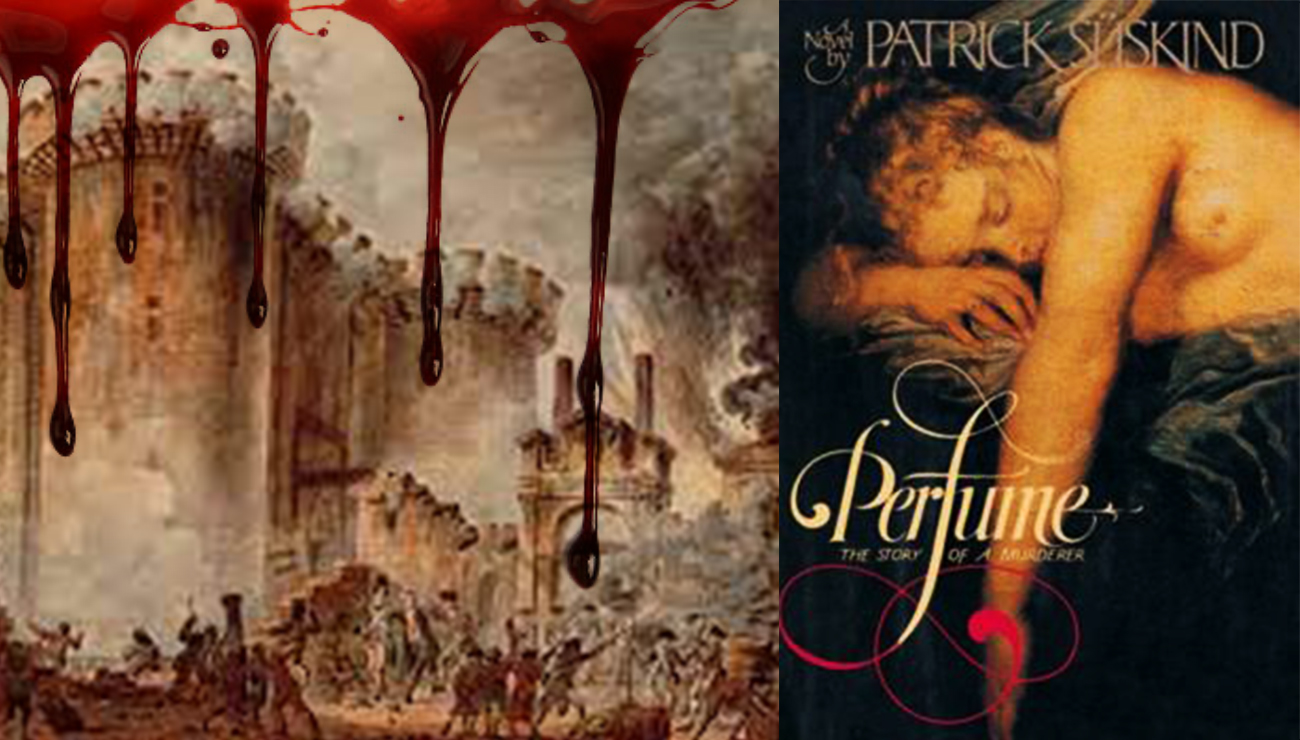
A few years ago, in 2015, due to those vagaries of fate that we sometimes weave for ourselves, my eyes stumbled onto the figure of an 18th century maiden asleep in the nude, defenseless, posed like Goya’s Maja who had decided to nap in her eternal enduring repose in direct disobedience of the artist’s creation. That maiden slumbers yet, unaware that I watch her disdainfully knowing that her virgin state is besieged by stealthy shadows slithering along the neighboring walls. There she is, still sleeping absently, ennobling the cover of a book I couldn’t bear leaving for others and which I eagerly picked up before someone else decided to reach out and own it.
The book cover I’ve referred to belongs to an edition with the title embossed in white letters, as if to demonstrate their semiotic character: letters devoid of color, a parody of the story of Jean Baptiste Grenouille, the main character, a fascinating man with a dark mind whose identifying trait is an amazing absence of any sense of smell.
What is amazing is that Süskind is a contemporary author who is still among us, younger even than García Márquez, who he surely must have read. Süskind has proved through his work to be in total control of the flavor of the past with such effectiveness that I can’t help thinking that even Victor Hugo himself would have enjoyed reading the novel, and surely commented and drawn parallels with the France in Les Misérables which he also tackled through a solitary character like his Jean Valjean in the 19th century, in a similar scenario.
The murderer’s total lack of malice takes the lead in the novel, as far as it subtracts any value at all from death and its uncertainties, subjected to his constant search to obtain increasingly more indispensable smells. Virginity is present in the novel as a unique ingredient ensuring the consummation of power and the intoxicating effect that seduces de murderer. However, virginity does not have the slightest hint of sexuality or eroticism for Jean Baptiste Grenouille, for it prevails as a way for the character to sublimate his desire to find his own smell.
Everything that occurs in the novel has an amazing semiotic strength supported by the power of the images that are created, through the impact of smells on the main character.
A Planetary Choreography: Each Tragedy Serves as a Screen to Hide Another

William Castaño
William Castaño-Bedoya is an American writer based in Coral Gables, Florida. His literary fiction explores the ethical, psychological, and emotional structures that shape human relationships, focusing on love, vulnerability, and the tensions between power and compassion. His narrative voice is marked by interiority, silence, and moral inquiry, privileging emotional intelligence over spectacle. After a long career in marketing and creative leadership, he turned fully to literature, bringing a strategic understanding of contemporary human experience to his work. He is the author of several novels, including "The Intriguing Stillness of the Tides", "We the Other People", "Ludovico", "Flowers for Maria Sucel", "The Galpon", and "We’ll Meet in Stockholm".