
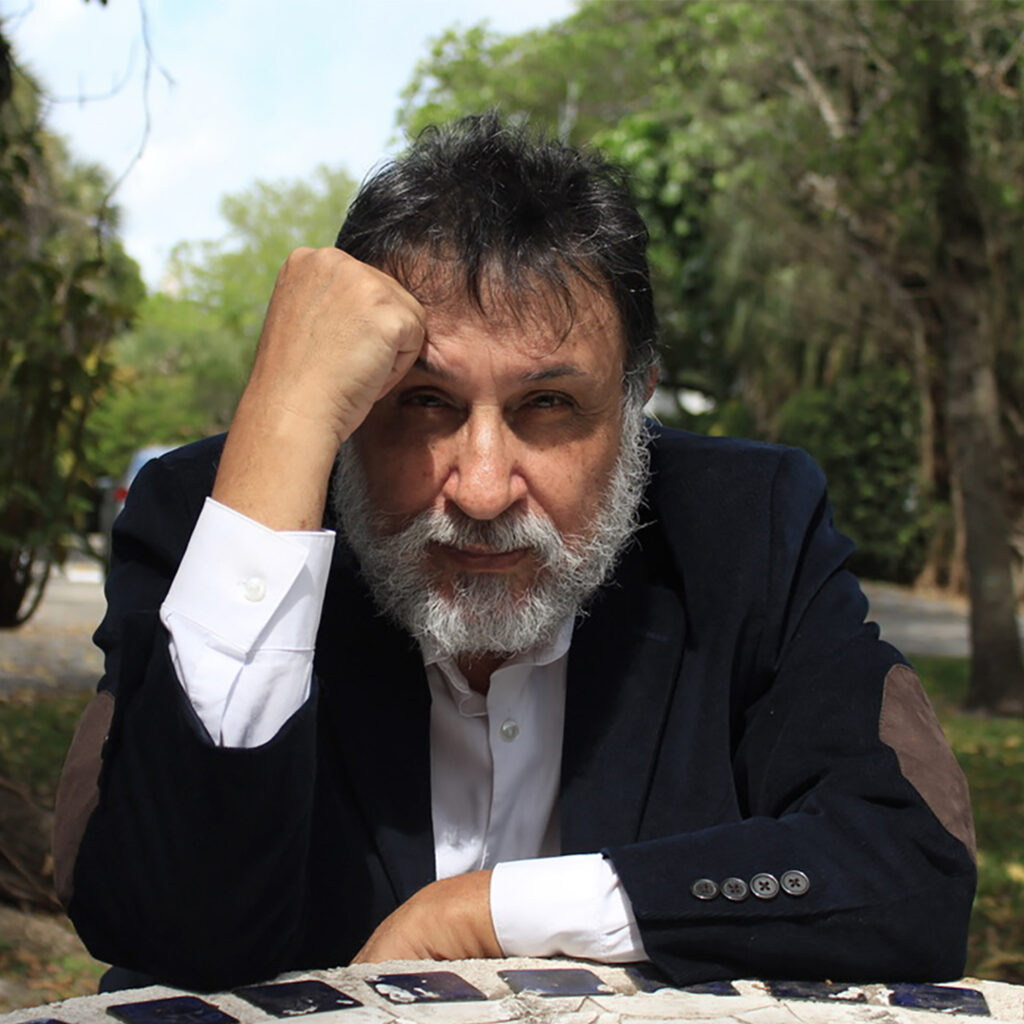
WILLIAM CASTANO-BEDOYA
Born in Armenia, Colombia. Lives and writes in Coral Gables, Florida.
American novelist and narrative essayist exploring the ethics of empathy, inner exile, and human vulnerability.
William Castaño-Bedoya writes fiction as a form of secular moral inquiry, centered on the inner architectures of consciousness, dignity, estrangement, and empathy. His narratives examine finitude, illness, and vulnerability as defining conditions of contemporary life, and explore love under ethical pressure as a space where power, freedom, and responsibility collide.
His work reflects on social contracts and invisible populations, revealing how modern societies construct exclusion, silence, and moral blind spots. It also engages neurodiversity and moral innocence as philosophical inquiries that challenge normative conceptions of will, guilt, and responsibility.
Ultimately, his writing conceives empathy not only as a feeling, but as a political and ethical architecture capable of transforming human coexistence.
THEMATIC UNIVERSE & RESEARCH LINES
His work examines the ethical infrastructures of modern life, including the politics of empathy, the ethics of vulnerability, and the fragile architectures of contemporary consciousness.
Consciousness and interiority
Finitude, illness and dignity
Love under ethical pressure
Neurodiversity and moral innocence
Social contracts and invisible populations
Empathy as political architecture
- The Intriguing Stillness of the Tides
- We’ll Meet in Stockholm
- The Beggars of the Mercury Lights: We the Other People
- Ludovico
- The Galpon
- Flowers for María Sucel
Homo Sapiens Empatheticus: A speculative novel exploring empathy as a governing architecture in future societies.
The Life Amendment: A narrative-philosophical manifesto on the ethics of life, fear, and constitutional responsibility.
Three Miles Chronicles: A series of narrative essays written during daily walks, blending philosophy, politics, and literary reflection.
His literary trajectory has been marked by inward exploration and independent publication. After consolidating this body of work, he now selectively participates in intellectual dialogues, literary encounters, and public conversations.